Many industrial firms approach digital transformation as a structured roadmap. Yet, in a ten-year study of the digital transformation of a leading Swedish corporation, combined with research on firms in Turkey, Brazil, and China, we show why transformation rarely follows a linear path, and why these challenges are now reappearing in large-scale AI initiatives.
The illusion of a linear digital transformation journey
Digital transformation is often viewed as a linear sequence of steps: define a strategy, implement new technologies, and scale successful solutions. Digital technologies challenge this linear view because they are not simply implemented once; their value depends on changing customer use, data flows, business models, organizational routines, and coordination across units. A linear view suggests a controlled and predictable process (See Figure 1). However, managers in established manufacturing firms frequently experience something very different. Initiatives stall, priorities shift, and organizational structures are repeatedly adjusted. Instead of steady progress, transformation unfolds in fits, detours, and restarts.
Our studies show that this is not a failure of execution. Rather, it reflects a fundamental mismatch between how transformation is planned and how it actually unfolds in a complex multi-organization setting. These mismatches are becoming particularly visible today as firms launch large-scale AI initiatives.
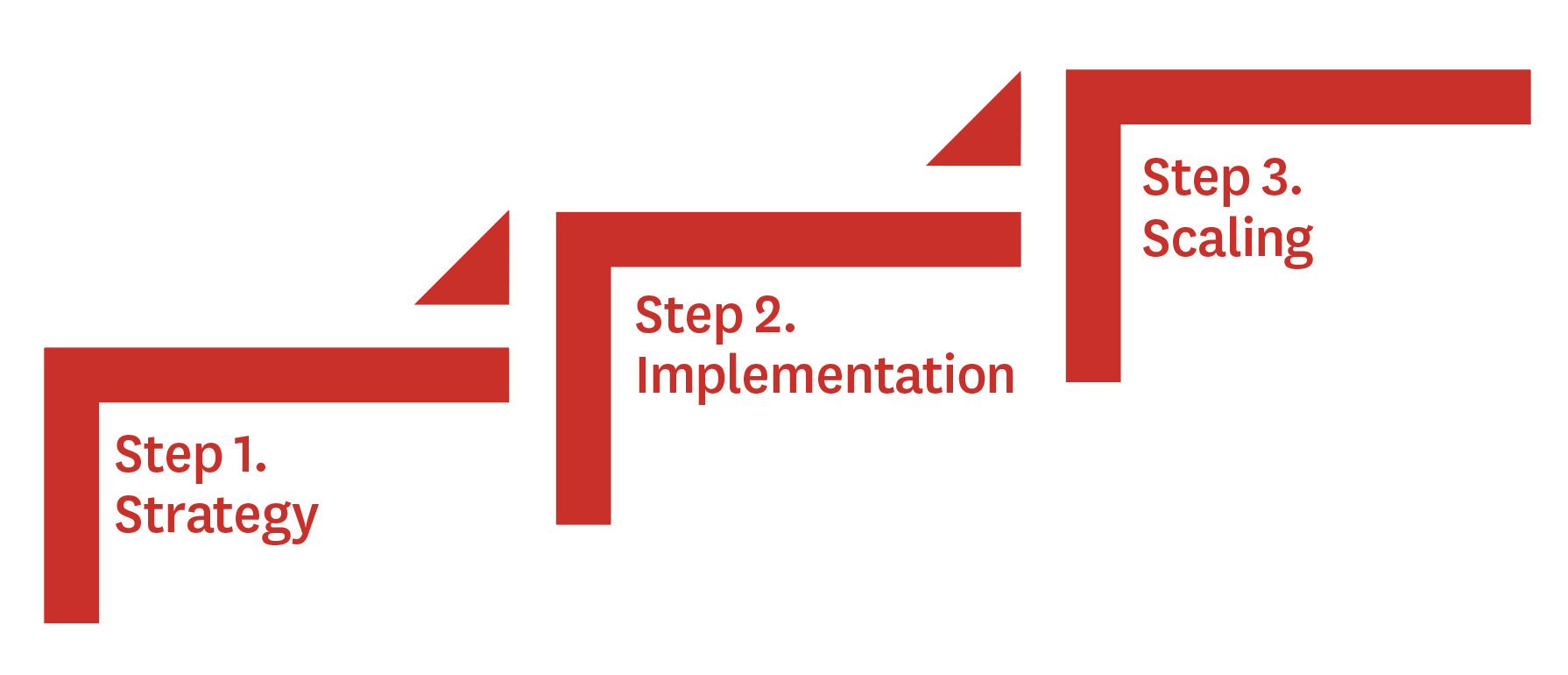
Figure 1. The Myth: Transformation as a linear sequence of steps
Three recurring tensions
The gap between strategy and reality is driven by three recurring tensions that emerge as transformation unfolds across organizational levels. The three tensions below are also relevant in an AI context.
A. Corporate ambition vs. business unit reality
Transformation is typically inspired by various mid-level efforts formally initiated at the corporate level, where leadership defines strategic priorities and long-term ambitions. Yet, implementation takes place within business units that operate under different constraints. Business units must balance new initiatives with their short-term performance requirements, creating friction between corporate ambitions and local realities. As a result, transformation becomes a negotiation rather than a rollout. In AI initiatives, this pattern can be amplified when centralized ambitions move faster than business units’ data, processes, and use cases can support.
B. Structural instability and repeated reorganization
To address these challenges, firms frequently adjust their organizational structures. Responsibilities shift, new roles are created, only to be later removed or redefined. In our case, firms moved between centralized and decentralized approaches as new challenges arose¹. These shifts were not planned — they were responses to increasing tensions, expectations, and delays. This creates a paradox: structures designed to enable transformation can also introduce new coordination and responsibility problems. In AI programs, this often appears through new labs, governance models, or roles whose connection to everyday operations remains unclear.
C. Misalignment in timing and readiness
Timing is critical. Digital technologies may be introduced before customers or organizations are ready. In our cases, some digital products achieved technical success but limited adoption, while AI initiatives lagged behind competitors. This illustrates that the problem is not speed, but timing. Transformation efforts often start too early or too late, creating missed opportunities in both directions. This is particularly visible in AI initiatives, where expectations, capabilities, and market readiness rarely evolve at the same pace.
A non-linear digital transformation process in practice
Taken together, these tensions mean that transformation does not follow a linear predefined path. Instead, it evolves through cycles of experimentation, adjustment, and adaptation. Early initiatives are often exploratory and fragmented. Over time, firms attempt to coordinate and scale these efforts, developing structures and increasing alignment. However, new tensions then emerge, requiring further adjustments. This non-linear transformation creates a recursive process: strategy leads to action, action reveals tensions, tensions trigger structural change, and the cycle continues (See Figure 2).
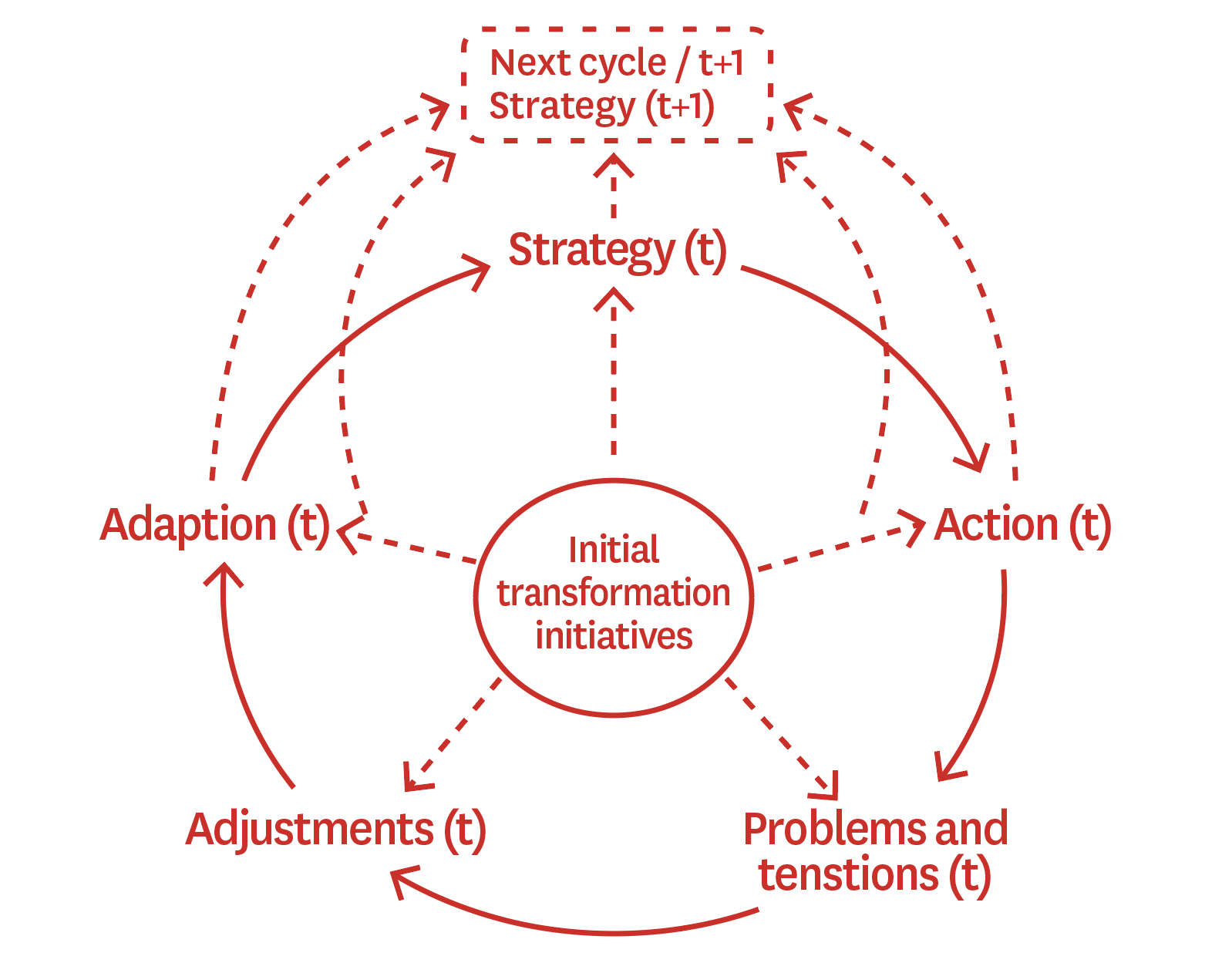
Figure 2. The reality: Transformation as a recursive process
Six lessons for managing transformation in the age of AI
Our findings from longitudinal studies of digital transformation in Swedish manufacturing firms and innovation journeys of emerging economies point to six practical lessons to approach transformation differently. These lessons are highly relevant for AI initiatives, where high expectations, data dependence, unclear use cases, and organizational learning needs often make transformation harder to plan and control.
1. Expect detours, not straight lines.
Transformation initiatives rarely follow a fixed plan. Managers should expect detours, reversals, and repeated adjustments rather than steady progress². Treat transformation as an evolving process and accept that new, multi-use technologies rarely generate immediate value. Early AI pilots often create learning, data access, and organizational understanding before they generate measurable business value
2. Turn tensions into productive friction
Tensions between corporate strategy and business unit execution are recurring conditions of transformation¹. Too much top-down control risks resistance, while too much autonomy risks fragmentation. The challenge is to make these tensions productive by combining corporate direction with local adaptation and knowledge.
In AI initiatives, this is especially important because corporate AI ambitions often depend on business units’ data, capabilities, processes, and willingness to take risks. Without business-unit engagement, AI risks becoming a centralized experiment with limited impact; without corporate engagement, it risks becoming scattered local pilots.
3. Protect experimentation—but not forever
New initiatives tend to be fragile. Early-stage efforts need protection from short-term performance pressures and internal competition. Without this, they are often shut down before they have a chance to develop. At the same time, prolonged protection creates isolation and weak integration with the rest of the organization. Managers need to decide when to expose new initiatives to broader organizational scrutiny—and when to shield them³.
This is particularly relevant for AI, where early experimentation may need time to incubate and build technical capability and use-case understanding, but must eventually be connected to everyday operations.
4. Use structure as a dynamic tool
Reorganizations rarely solve transformation challenges. They typically address the symptoms, not the underlying problem¹. New structures often introduce new coordination issues while the original problem remains. Structure is not just the formal skeleton of the organization — it shapes how people work, learn, decide, and act. Structural change should therefore not be treated as a fix but as something that requires continuous adjustment to support deeper organizational innovation.
For AI initiatives, creating an AI lab, a governance board, or a new digital unit is rarely enough. Firms also need to rethink decision rights, data ownership, responsibilities, and the embedding of AI capabilities in operational work.
5. Align timing—not just speed
Many digital and AI initiatives are poorly timed. Some move too early, before customers and organizations are ready; others come too late, after momentum is lost. The problem is not speed itself, but misalignment. Managers need to focus on when to scale—not just how fast—and align initiatives with actual readiness inside the organization, in the market, and among competitors.
In AI initiatives, this means assessing whether data, use cases, technical competence, and organizational routines are mature enough to scale, while also monitoring whether competitors are moving faster and changing the nature of competition.
6. Develop adaptive capabilities over time
Successful transformation depends less on the technologies themselves and more on how organizations respond when it challenges existing structures and priorities. It requires individuals who drive change and create space for experimentation despite competing demands. Yet, many organizations struggle to sustain attention over time. Digital and AI initiatives often lose momentum as they compete with short-term operational priorities.
This is increasingly evident in AI initiatives, where investments often outpace data access, organizational routines, and everyday use cases. Progress depends on people who keep initiatives alive in practice, not only on technical investment.
Practical takeaways
Digital transformation is rarely as structured as it appears at first sight. Our findings point to a harder truth: transformation unfolds through recurring problems that are not resolved, but reappear in new forms across strategy, structure, and execution. These dynamics are not limited to digitalization. AI makes the myth of linear transformation especially treacherous: pilots can move fast, while ownership, routines, learning, value creation, and business models move slowly. In a fragmented and volatile environment, large-scale transformations are difficult to plan and control. Organizations face shifting conditions, competing priorities, and increasing pressure to act before they are ready.
The real managerial challenge is not to design the right roadmap, but to build organizations that can adapt continuously, sustaining attention and progress even when early experimentation fails to deliver clear results. This requires a managerial shift of focus from planning and implementation to resilience – the ability to respond, adjust, and redirect under changing conditions and disruptive times.
The paper was developed based on projects supported by Vinnova – Sweden’s Innovation Agency (Grant numbers: 2014-03388; 2018-02930; 2022-00301; 2024-03735).
References:
> 1 Karabag, S. F., Simonsson, J., Berggren, C., Andreasson, M., & Eriksson, R. (2026). Digital transformation as a multi-phase process: a longitudinal study of corporate strategy and business unit adaptation. Journal of Business Research, 202, 115796.
> 2 Andreasson, M., Karabag, S. F., Simonsson, J., & Agarwal, G. (2024). Dynamics of related and unrelated digital diversification in established firms: Strategies, programs, process, and outcomes. Technological Forecasting and Social Change, 202, 123300.
> 3 Karabag, S. F., & Berggren, C. (2023). Dynamics of catching up: exploring national, sectoral, and ownership influences in two emerging economy firms. Journal of Management & Organization Studies, 8(2), 121-176.